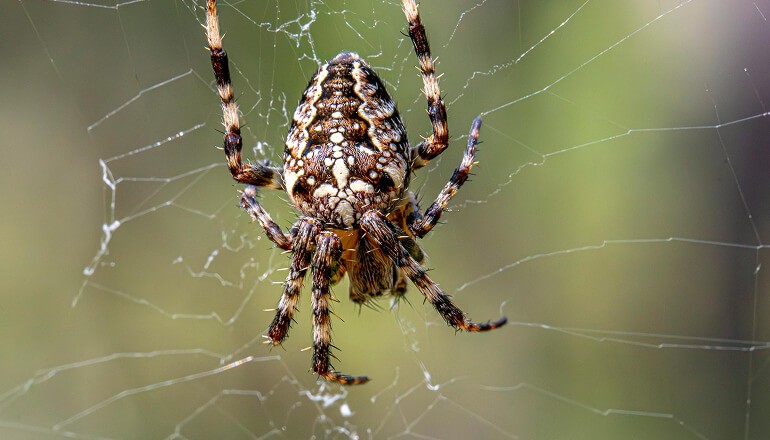
Why Spiders Around House Foundation Gather

Written by:
Casey Shaw
April 12th, 2026
5 Minute Read
You usually spot them at the worst time - walking the dog after dark, pulling a trash bin back to the side yard, or checking the hose line and catching a web stretched across the foundation. If you keep seeing spiders around house foundation areas, that is not random desert life. It is a signal. Your home’s perimeter is giving spiders what they want: shelter, prey, moisture, or access.
In Scottsdale and across the Phoenix Valley, foundation lines are prime staging zones for pest activity. Concrete stays cooler than open ground, irrigation creates pockets of dampness, and landscaping gives insects a place to hide. Where insects collect, spiders set up shop. That matters because a spider problem around the base of the home is often part of a bigger perimeter issue, not just a few isolated webs.
Why spiders around house foundation areas are so common
Most homeowners assume spiders are trying to get inside first. Often, they are doing well outside before they ever move indoors. The foundation creates a transition zone between the structure and the yard, and that edge is one of the most active pest corridors on the property.
In Arizona, that edge gets even more attractive during extreme heat. Spiders look for shade, stable surfaces, and places where food keeps showing up. Foundation cracks, stem walls, decorative rock, block fences, irrigation lines, and groundcover all work together to create a reliable hunting zone. Add porch lights or garage lighting that draw insects at night, and you have a perimeter buffet.
Not every spider hugging the foundation is dangerous, but repeated activity should not be shrugged off. Spiders are predators. If they are thriving there, it usually means other pests are active too. Crickets, roaches, ants, flies, and other insects are often the real engine behind the spider presence.
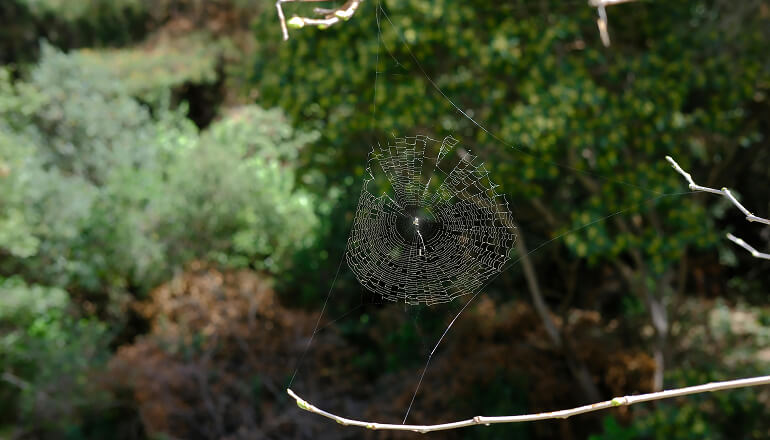
What attracts spiders to your foundation
Food is the biggest driver. Spiders stay where they can catch insects consistently. A home with high perimeter bug activity will almost always see more webs, more egg sacs, and more movement around expansion joints, weep screeds, garage corners, and patio edges.
Moisture is another major factor, especially in desert neighborhoods where water stands out. Overwatering near the slab, leaking hose bibs, AC condensation, and drip lines placed too close to the house can create just enough dampness to support insect life. Even a small moisture source can turn one side of the house into a repeat hotspot.
Clutter also changes the equation. Stored pots, stacked pavers, firewood, pool toys, and dense shrubs near the wall give spiders cover during the day. They do not need much. A protected gap with low traffic and nearby prey is enough.
Then there is lighting. Bright exterior lights attract flying insects, and flying insects attract web-building spiders. If your front entry, back patio, or side yard stays lit every night, spiders may treat those zones like a permanent feeding lane.
Arizona homes have a few extra risk factors
Desert construction and landscaping can make perimeter spider issues more stubborn than homeowners expect. Decorative rock is popular in Scottsdale, but it creates countless protected voids for insects and spiders. Block walls and stucco finishes add corners, seams, and shaded recesses. Many homes also have garage thresholds, side gates, utility penetrations, and drainage lines that create easy movement routes along the foundation.
Monsoon season can intensify the problem. When rain shifts insect activity and humidity rises, spiders respond fast. Heat waves can do the same by pushing pests toward cooler, more sheltered zones around the home. This is why one-time treatments often disappoint people. The pressure changes with the season, and your defense has to adjust with it.
There is also the Arizona reality homeowners know well - spiders do not exist in a vacuum. Where there are spiders, you may also have prey insects and, in some cases, conditions that overlap with scorpion activity. That does not mean every web means a serious threat, but it does mean perimeter pest management needs to be strategic.
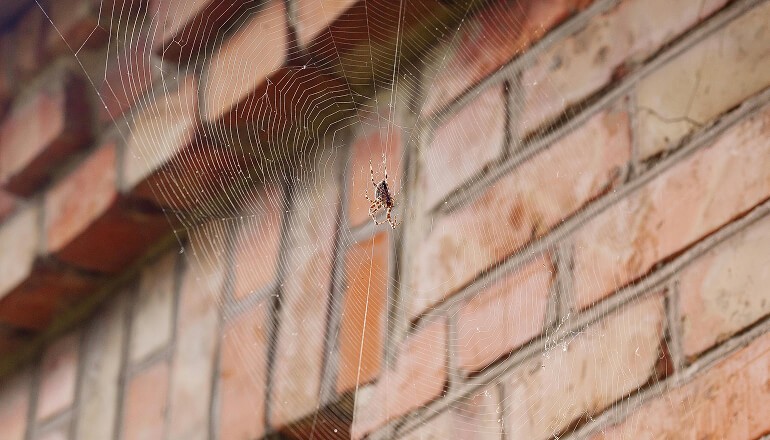
When spiders around house foundation spots become a real problem
A few occasional webs do not always mean you have a major infestation. The concern grows when activity is persistent, spreading, or showing up in the same areas week after week. If you are constantly sweeping webs from corners, seeing egg sacs attached to stucco or trim, or noticing spiders moving from the exterior into the garage or interior, the perimeter barrier is weakening.
You should also pay attention if spider activity is concentrated near doors, windows, or utility entry points. Those are transition points. Once spiders establish themselves around them, indoor sightings become more likely.
Another red flag is when the spider issue feels tied to another pest issue. If you are already seeing roaches, crickets, ants, or other crawling insects outside at night, spiders may simply be taking advantage of an active food source. In that case, treating spiders alone only solves part of the problem.
What you can do right now
If you want fewer spiders around the foundation, start by making the perimeter less profitable for them. Cut back shrubs and groundcover so they are not touching or crowding the home. Move stored items off the ground and away from the exterior wall. Reduce web anchor points where possible, especially around patio furniture, garage trim, and utility boxes.
Check irrigation next. Water should support your landscaping, not feed pest pressure at the slab. Fix drips, avoid overspray onto the house, and keep emitters from soaking the immediate foundation line. If one side yard always stays damp, that side yard will keep producing activity.
Lighting changes can help too. Warmer, less attractive bulbs and better fixture placement can reduce the insect traffic that fuels spider presence. This is not a magic fix, but it can lower the nightly food supply.
Routine cleaning matters more than many people think. Knocking down webs and removing egg sacs reduces repeat activity, but it works best when paired with broader pest control. Otherwise, spiders often rebuild in the same productive areas.
Why store sprays often fall short
A lot of over-the-counter products kill what you can see and miss what is driving the issue. That is the trap. Homeowners spray the visible webs, see a short-term drop, and then wonder why spiders are back in a week or two.
The problem is not just the spider. It is the environment supporting the spider. If insects remain active around the foundation, if harborage stays in place, and if there is no consistent perimeter treatment plan, the property keeps inviting new activity.
This is where professional service earns its keep. A real defense plan looks at the whole perimeter, identifies where activity is building, and treats the structure like a system instead of a single event. That means inspection, targeted treatment, exterior barrier work, and seasonal follow-up.
For many Arizona homeowners, recurring service is the difference between chasing bugs and actually controlling them. Studs Against Bugs approaches spider control the same way elite defense should work - not as a one-shot reaction, but as an ongoing barrier built around local pest pressure, climate shifts, and the way your property is laid out.
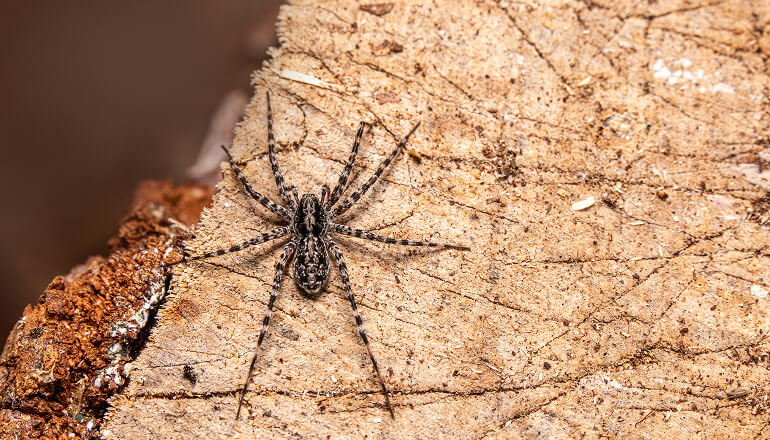
What professional spider control should include
Strong spider control starts with inspection, because not every foundation problem has the same cause. One home may have heavy insect pressure from landscape lighting. Another may have moisture buildup behind dense plants. Another may have cluttered side yards and wall void activity. If the treatment is generic, results usually are too.
A better plan targets active zones around the foundation, eaves, entry points, garage perimeter, and fence lines while also reducing the prey insects spiders depend on. It should include web removal guidance, recommendations for trimming or sanitation, and a recurring schedule that matches Arizona conditions.
That recurring piece matters. Pest pressure here is not static. Summer heat, monsoon moisture, and cooler seasonal shifts all change where pests move and how aggressively they cluster around structures. Professional-grade defense works best when it is maintained, adjusted, and reinforced over time.
The goal is not zero spiders in the desert
That is the honest part. In Arizona, no one can promise the desert will stop being the desert. You may still see occasional spiders outside, especially after weather changes or in heavily landscaped areas. The real goal is control - fewer webs, less repeat activity, and a stronger perimeter that makes it much harder for pests to settle in around the home.
That is a better standard anyway. It is realistic, it is measurable, and it protects your family’s day-to-day comfort without pretending nature can be switched off.
If spiders keep showing up around your foundation, treat it like an early warning, not a cosmetic annoyance. The sooner you tighten the perimeter, the easier it is to stop a small exterior issue from turning into a bigger problem inside the home.
Casey Shaw
Founder,
Studs Against Bugs
Ready for protection?
Muscle vs. Micro-Pests: We don’t just spray and pray. Our team utilizes heavy-duty, professional-grade barriers engineered to withstand the intense Arizona heat and keep desert pests out for good. While we are headquartered in Scottsdale, our elite protection extends across the entire Phoenix metro—from the rugged terrain of Cave Creek and Carefree to the residential hearts of Gilbert, Chandler, and Mesa.
Built to Protect: Like a well-built home, our pest defense starts with a solid foundation. We identify specific structural vulnerabilities—from weep screeds in Peoria to roof lines in Paradise Valley—ensuring every property is "Stud-Tested" and bug-proof. Because we operate from Buckeye to Queen Creek, we possess a deep understanding of how scorpions and termites behave in every unique desert environment.
Reliable & Rugged Service: Whether you are in Fountain Hills, Glendale, or Goodyear, we show up on time, every time. We provide the hardworking, honest service that residents from Surprise to Tempe expect from a premium local partner. From the West Valley to the East, we are your rugged defense against the desert’s toughest pests